临床儿科杂志 ›› 2026, Vol. 44 ›› Issue (5): 394-398.
Limin Dou1, Jianbo Wang2, Yunqing REN3( ), Ming LI1()
摘要:
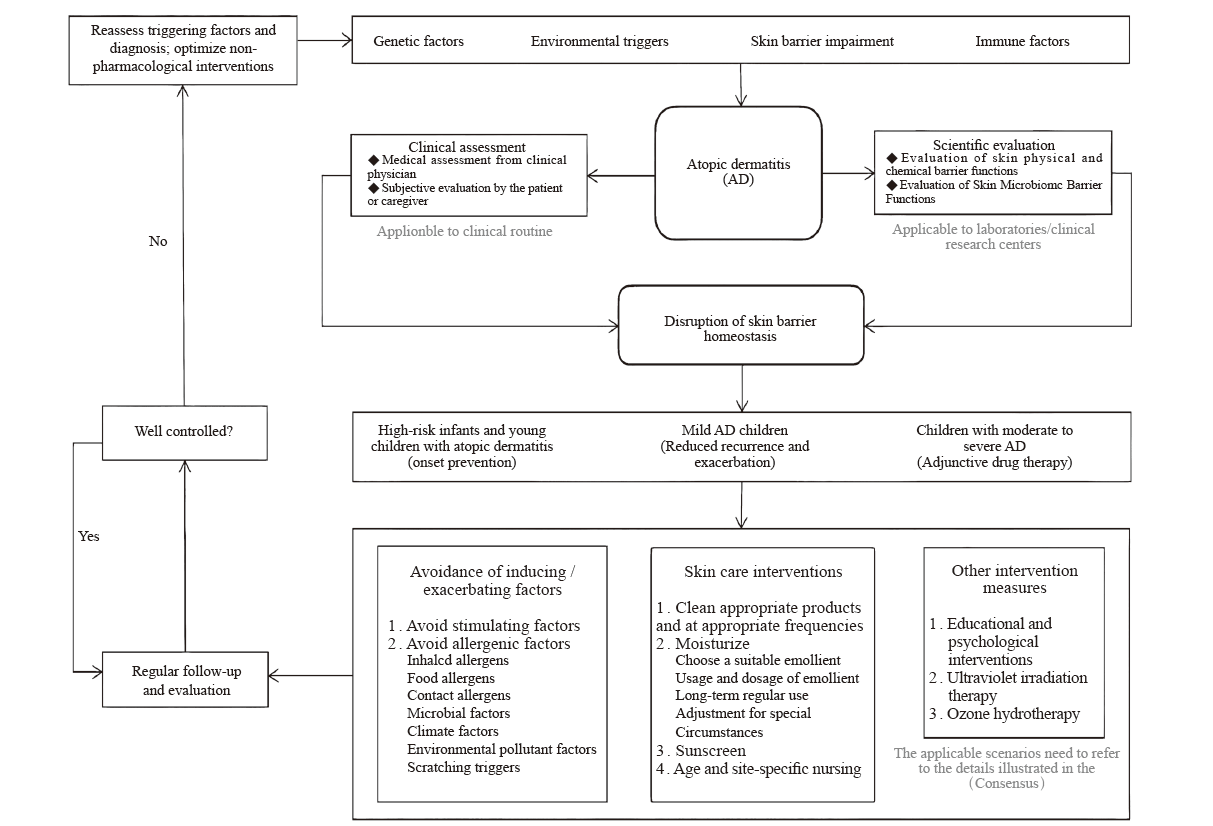
Atopic dermatitis (AD) is a chronic, relapsing inflammatory skin disorder that is highly prevalent in children. Because of its pathogenesis and clinical heterogeneity, exclusive use of pharmacological treatment cannot achieve the optimal control of AD. This consensus therefore endorses non-pharmacological interventions as essential components of comprehensive AD management. The recommendations emphasize the avoidance of environmental triggering factors, the maintenance and restoration of skin barrier homeostasis via structured skincare, and the implementation of patient/caregiver education and psychological support. These measures aim not only to reduce relapse frequency and extent clinical remissions, but also to improve the quality of life for patients and caregivers. The consensus offers four core recommendations: (1) Non-pharmacological interventions should be employed as primary management strategies across the spectrum of AD severity, from mild to severe disease. (2) Effectiveness of the interventions should be assessed through clinical and medical evaluation, with supplemental objective or laboratory measurements when feasible. (3) Primary interventions include systematic avoidance of environmental triggers, regular application of skin care, and structured programs for education and psychological support. (4) Non-pharmacological strategies are applicable at all stages of disease, from prevention to active flares and clinical remissions.
 沪公网安备 31011002000392号