

Journal of Clinical Pediatrics ›› 2026, Vol. 44 ›› Issue (1): 56-63.doi: 10.12372/jcp.2026.24e0351
• Pediatric Grand • Previous Articles Next Articles
LIANG Zhiru1,2, GUO Linmei1, WANG Fei1,2, ZHAO Xiaoyun1( )
)
Received:2024-04-16
Accepted:2025-01-10
Published:2026-01-15
Online:2026-01-05
CLC Number:
LIANG Zhiru, GUO Linmei, WANG Fei, ZHAO Xiaoyun. Lupus enteritis or inflammatory bowel disease: a report of the diagnosis and treatment of systemic lupus erythematosus complicated with gastrointestinal symptoms[J].Journal of Clinical Pediatrics, 2026, 44(1): 56-63.
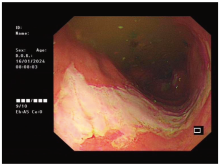
Figure 1
Before treatment, colonoscopy showed multiple semi-circumferential irregular ulcers"

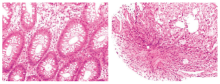
Figure 2
The pathological results showed inflammatory changes in the acute active phase"

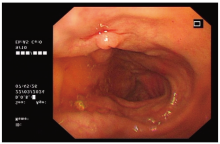
Figure 3
After treatment, colonoscopy showed that the ulcer was healing compared with before treatment"
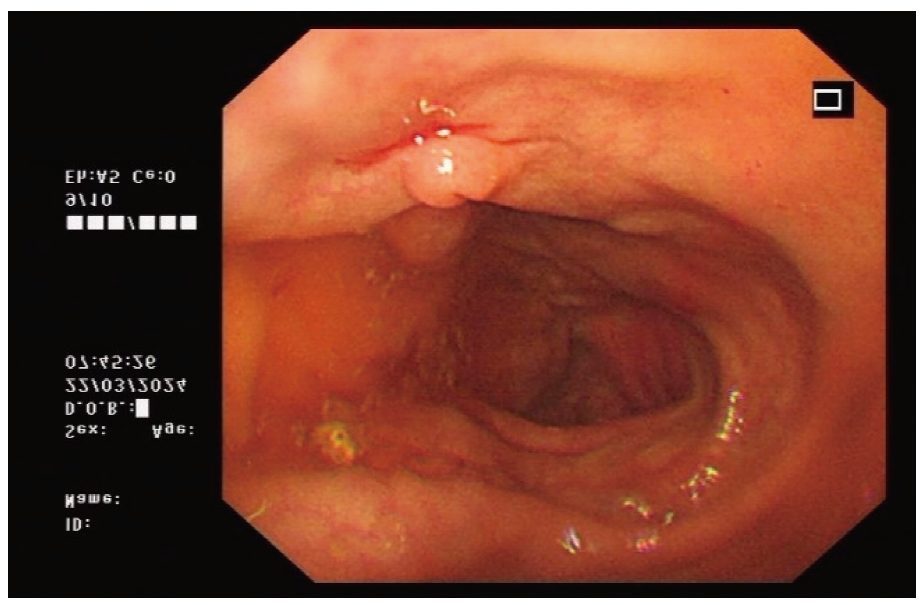
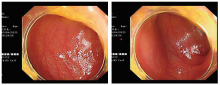
Figure 4
After 1 year of follow-up, colonoscopy showed that the ulcer was significantly healed"
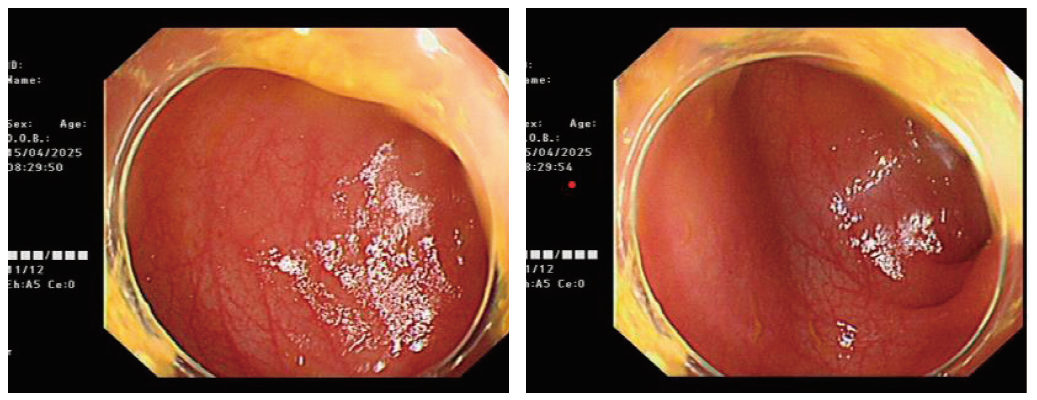

Table 1
The patient's main diagnosis and treatment options and timeline of the patient's course of illness"
| 时 间 | 临床表现、检查及治疗方案 |
|---|---|
| 2018年2月 | 间断腹痛伴双下肢疼痛10天,发热1天。血常规示WBC 2.44×10⁹·L-1、NEU 1.19×10⁹·L-1、RBC 2.19×10¹²·L-1、 Hb 63g·L-1、PLT 195×109·L-1;粪常规示隐血试验弱阳性;ESR 77 mm·h-1;ANA阳性(1∶320)、抗dsDNA抗体弱阳性、抗Sm抗体阳性、抗rRNP抗体阳性、抗U1-snRNP抗体阳性。诊断为SLE、心包积液、重度缺铁性贫血,给予泼尼松(10 mg,tid)治疗。 |
| 2018年3月 | 发热伴间断腹痛7天,体温39 ℃,入院后诊断为SLE活动期。给予泼尼松(25 mg,bid)联合环磷酰胺冲击治疗。 |
| 2020年2月 | 于第11次环磷酰胺冲击前3天出现频繁呕吐伴剑突下疼痛,头颅核磁及腰椎穿刺未见异常,诊断为活动性SLE、LE。院内甲泼尼龙冲击(600 mg,qd)联合静注免疫球蛋白(10 g,qd)治疗3天。出院后给予泼尼松 (15 mg,qd)联合羟氯喹(0.08 g,bid)治疗。 |
| 2022年8月 | 发热伴腹痛、稀便2天,腹部核磁示腹腔内部分肠管扩张并积液、积气;肝左内叶囊肿;腹膜后、双侧髂血管旁及腹股沟区多发增大淋巴结;盆腔少量积液。胃镜下见贲门炎症。诊断为LE、肝囊肿。给予泼尼松(30 mg,qd)联合羟氯喹(0.075 g,bid)、吗替麦考酚酯(0.75 g,bid)。 |
| 2023年9月 | 腹痛4天,考虑低活动性SLE,给予抗感染、调理肠道菌群、保护胃肠黏膜治疗。继续给予泼尼松联合羟氯喹、吗替麦考酚酯治疗。 |
| 2024年1月 | 右上腹持续钝痛6天,无发热。血常规示WBC 10.51×10⁹·L-1、NEU 9.63×10⁹·L-1、LYM 0.27×10⁹·L-1、PLT 239×109·L-1;CRP 74.8 mg·L-1;ANA(1∶320)、抗rRNP抗体阳性、抗U1-snRNP抗体阳性;ESR 47 mm·h-1。肠镜检查示升结肠肝曲侧-横结肠中段见多发半环周不规则溃疡形成,覆白苔,周围黏膜充血。病理结果示黏膜组织,灶性上皮脱落,肉芽组织增生,间质炎细胞浸润,符合溃疡征象,伴急性活动期炎症改变。诊断为SLE、UC。给予泼尼松(40 mg·d-1)、羟氯喹(0.075 g,bid)、吗替麦考酚酯(0.75 g,bid)联合英夫利昔单抗治疗。 |
| 2024年3月 | 入院复查,给予英夫利西单抗序贯治疗。ANA阳性(1∶100)、抗rRNP抗体阳性、抗U1-snRNP抗体阳性; ESR 8 mm·h-1,肠镜显示横结肠中段见半环周浅溃疡形成。覆薄白苔,周围黏膜充血,呈挛缩、缩窄状。其对侧见白色瘢痕形成。较未治疗前溃疡数量明显减少、面积缩小,呈愈合趋势。 |
| 2025年4月 | 入院复查,ANA阳性(1∶100)、抗rRNP抗体阳性、抗U1-snRNP抗体阳性;便常规示正常。肠镜显示降结肠、直肠黏膜略肿胀,血管网清晰,肠管舒缩好,未见异常病变。 |
| [1] | Alharbi S. Gastrointestinal manifestations in patients with systemic lupus erythematosus[J]. Open Access Rheumatol, 2022, 14: 243-253. |
| [2] | 苏宁, 张绍荣, 章秀丽. 以狼疮性肠炎为首发表现的系统性红斑狼疮一例[J]. 临床内科杂志, 2019, 36(4): 277-278. |
| Su N, Zhang SR, Zhang XL. A case of systemic lupus erythematosus with lupus enteritis as the first manifestation[J]. Linchuang Neike Zazhi, 2019, 36(4): 277-278. | |
| [3] | 谢敏珠, 靳政玺, 胡伟新. 系统性红斑狼疮相关肠道损伤的研究进展[J]. 肾脏病与透析肾移植杂志, 2021, 30(5): 480-484. |
| Xie MZ, Jin ZX, Hu WX. Intestinal injury in systemic lupus erythematosus[J]. Shenzangbing Yu Touxi Shenyizhi Zazhi, 2021, 30(5): 480-484. | |
| [4] |
Kaenkumchorn T, Wahbeh G. Ulcerative colitis: making the diagnosis[J]. Gastroenterol Clin North Am, 2020, 49(4): 655-669.
doi: 10.1016/j.gtc.2020.07.001 |
| [5] |
Harbord M, Eliakim R, Bettenworth D, et al. Corrigendum: third European evidence-based consensus on diagnosis and management of ulcerative colitis. Part 2: current management[J]. J Crohns Colitis, 2017, 11(12): 1512.
doi: 10.1093/ecco-jcc/jjx105 pmid: 29088340 |
| [6] | Edmund L, Dubois EL, Tuffanelli DL. Clinical mani-festations of systemic lupus erythematosus computer analysis of 520 cases[J]. JAMA, 1964, 90: 104-111. |
| [7] |
De Jager PL, Graham R, Farwell L, et al. The role of inflammatory bowel disease susceptibility loci in multiple sclerosis and systemic lupus erythematosus[J]. Genes Immun, 2006, 7(4): 327-334.
pmid: 16642031 |
| [8] |
Ferreiros-Vidal I, Garcia-Meijide J, Carreira P, et al. The three most common CARD15 mutations associated with Crohn's disease and the chromosome 16 susceptibility locus for systemic lupus erythematosus[J]. Rheumatology (Oxford), 2003, 42(4): 570-574.
doi: 10.1093/rheumatology/keg192 |
| [9] |
Nitzan O, Elias M, Saliba WR. Systemic lupus erythe-matosus and inflammatory bowel disease[J]. Eur J Intern Med, 2006, 17(5): 313-318.
pmid: 16864003 |
| [10] |
Alves SC, Fasano S, Isenberg DA. Autoimmune gastro-intestinal complications in patients with systemic lupus erythematosus: case series and literature review[J]. Lupus, 2016, 25(14): 1509-1519.
doi: 10.1177/0961203316655210 |
| [11] |
Yamashita H, Ueda Y, Kawaguchi H, et al. Systemic lupus erythematosus complicated by Crohn's disease: a case report and literature review[J]. BMC Gastroenterol, 2012, 12:174.
doi: 10.1186/1471-230X-12-174 pmid: 23216789 |
| [12] |
Tian XP, Zhang X. Gastrointestinal involvement in systemic lupus erythematosus: insight into pathogenesis, diagnosis and treatment[J]. World J Gastroenterol, 2010, 16(24): 2971-2977.
doi: 10.3748/wjg.v16.i24.2971 |
| [13] |
Shor DB, Dahan S, Comaneshter D, et al. Does inflammatory bowel disease coexist with systemic lupus erythematosus?[J] Autoimmun Rev, 2016, 15(11): 1034-1037.
doi: 10.1016/j.autrev.2016.07.027 |
| [14] |
Aggarwal BB, Gupta SC, Kim JH. Historical perspectives on tumor necrosis factor and its superfamily: 25 years later, a golden journey[J]. Blood, 2012, 119(3) :651-665.
doi: 10.1182/blood-2011-04-325225 pmid: 22053109 |
| [15] | 谢小萌, 何琼. 英夫利昔单抗治疗炎症性肠病的研究进展[J]. 现代临床医学, 2022, 48(6): 472-476. |
| Xie XM, He Q. Research progress of infliximab in the treatment of inflammatory bowel disease[J]. Xiandai Linchuang Yixue, 2022, 48(6): 472-476. | |
| [16] | Zhu LJ, Yang X, Yu XQ. Anti-TNF-alpha therapies in systemic lupus erythematosus[J]. J Biomed Biotechnol, 2010, 2010: 465898. |
| [17] | 洪铭齐. 中重度溃疡性结肠炎早期应用英夫利昔单抗治疗的疗效分析[D]. 吉林大学, 2023. |
| Hong MQ. Efficacy analysis of infliximab in early treatment of moderate to severe ulcerative colitis[D]. Jilin University, 2023. | |
| [18] |
Ben-Horin S, Ungar B, Eliakim R, et al. Infliximab efficacy and safety in an ulcerative colitis patient with systemic lupus erythematosus[J]. J Crohns Colitis, 2016, 10(6): 752-753.
doi: 10.1093/ecco-jcc/jjw034 pmid: 26826571 |
| [19] |
João-Magalhães M, Lago P, Pedroto I. Crohn's disease and systemic lupus erythematosus: a rare and challenging association[J]. Rev Esp Enferm Dig, 2015, 107(6): 394-395.
pmid: 26031877 |
| [20] |
Principi M, Di Leo A, Ingrosso M, et al. Lupus neph-ritis improvement after anti-tumor necrosis factor alpha monoclonal antibody (infliximab) treatment for Crohn's disease: a case report[J]. Immunopharmacol Immunotoxicol, 2004, 26(2): 243-248.
doi: 10.1081/IPH-120037721 |
| [21] |
Kagaya Y, Sakamoto H, Yano T, et al. Mucosal healing of Crohn's disease in a patient with concurrent systemic lupus erythematosus using infliximab[J]. Clin J Gastroenterol, 2017, 10(3): 244-249.
doi: 10.1007/s12328-017-0737-0 pmid: 28364315 |
| [22] |
Mansour HE, Arafa SG, Shehata WA. Systemic lupus erythematosus with inflammatory bowel disease-ulcerative colitis: case report[J]. Lupus, 2018, 27(7): 1198-1201.
doi: 10.1177/0961203317751857 pmid: 29320975 |
| [23] |
Jin X, Wang G, Xu X, et al. Coexistence of Crohn's disease and systemic lupus erythematosus: a case report and literature review[J]. Eur J Gastroenterol Hepatol, 2020, 32(9): 1256-1262.
doi: 10.1097/MEG.0000000000001775 |
| [1] | Subspecialty Pediatric Consensus Collaborative Group, Subspecialty Group of Infectious Diseases, Society of Pediatric, Chinese Medical Association, Subspecialty Group of Infectious Diseases, Society of Pediatric, Zhejiang Medical Association, National Clinical Research Center for Children and Adolescents' Health and Diseases. Expert consensus on the clinical application and individualized therapy of oxazolidinone antibiotics in children [J]. Journal of Clinical Pediatrics, 2026, 44(1): 1-16. |
| [2] | CHEN Dan, REN Jiaying, SUN Lifang, WEI Zhenghu, SUN Xiaomin. Clinical features and prognosis of severe Mycoplasma pneumoniae pneumonia combined with intracardiac thrombus in children: a single-center retrospective study [J]. Journal of Clinical Pediatrics, 2026, 44(1): 17-24. |
| [3] | LIU Min, WANG Qi, SU Jun, CUI Lidan, SUN Huixia, NING Wenhui. Clinical features, diagnosis, and treatment of Mycoplasma pneumoniae pneumonia secondary to infective endocarditis in children [J]. Journal of Clinical Pediatrics, 2026, 44(1): 25-30. |
| [4] | JIA Ru, MA Yan, YU Qun, LIU Haiping, LIU Ping. An analysis of influenza vaccine coverage and influencing factors among children under 16 years old in two suburban districts of Shanghai [J]. Journal of Clinical Pediatrics, 2026, 44(1): 31-37. |
| [5] | WU Jinjun, XIONG Hao, ZENG Hui, CHEN Zhi, YANG Li, SUN Ming, WANG Zhuo, DU Yu, QI Shanshan, WANG Wei, ZHANG Lannan. Clinical analysis of allogeneic hematopoietic stem cell transplantation on pediatric myeloid sarcoma [J]. Journal of Clinical Pediatrics, 2026, 44(1): 44-50. |
| [6] | ZHOU Yuanke, SUN Lina, FANG Ying. Research progress on the role of zinc in the occurrence, development and treatment of inflammatory bowel disease in children [J]. Journal of Clinical Pediatrics, 2026, 44(1): 64-70. |
| [7] | ZHANG Wenting, FENG Juan. Progress in pediatric Takotsubo syndrome [J]. Journal of Clinical Pediatrics, 2026, 44(1): 79-83. |
| [8] | ZHANG Wei, WANG Yang, DENG Wenhua, WU Yabin. Analysis of clinical manifestations, ciliary structure and genetic characteristics of primary ciliary dyskinesia in 14 children [J]. Journal of Clinical Pediatrics, 2025, 43(9): 680-685. |
| [9] | XIANG Linjuan, CHEN Xuexin, JIA Yanhui, WU Yuhang, CONG Xin, LI Wei, CHEN Yingying, CHEN Sun, HUANG Lisu. Prognostic factors analysis of adenovirus type 3 pneumonia in children [J]. Journal of Clinical Pediatrics, 2025, 43(9): 686-691. |
| [10] | WANG Jie, WU Bin, ZHANG Lannan, CHEN Kailan. Two cases of pediatric hepatosplenic T-cell lymphoma and literature review [J]. Journal of Clinical Pediatrics, 2025, 43(9): 698-704. |
| [11] | YE Zehui, JIANG Xiaoli. A case report of sirolimus in the treatment of diffuse pulmonary lymphangiomatosis in children [J]. Journal of Clinical Pediatrics, 2025, 43(9): 705-709. |
| [12] | DONG Suzhen, CHEN Hao, ZHANG Zhiyong, JIANG Fan. Applications of low field MRI in pediatrics and prenatal fetal diagnosis [J]. Journal of Clinical Pediatrics, 2025, 43(9): 710-715. |
| [13] | ZHOU Zhixuan, WANG Ying. Application progress of glucagon-like peptide-2 analogues in inflammatory bowel disease [J]. Journal of Clinical Pediatrics, 2025, 43(9): 716-722. |
| [14] | SHI Xiaosong, FU Shijie, HE Xiaohua, LYU Hui, CHEN Houyang, CHEN Maolin, CHEN Jie. Antigenic genotypic characteristics and antibiotic resistance analysis of Bordetella pertussis in two regions of Fujian province [J]. Journal of Clinical Pediatrics, 2025, 43(8): 575-582. |
| [15] | PEI Pei, LI Weihua, HUAI Wan, YAO Ruen, GE Hejia, WANG Jiwen, WANG Xiumin, JI Wei, ZHOU Yunqing, HE Yingzhong, HAN Feng. Genetic and clinical characteristics analysis of 10 children with ATP1A2/ATP1A3 gene variants [J]. Journal of Clinical Pediatrics, 2025, 43(8): 590-597. |
|
||
